Thai Massage in Kharghar: What It Actually Feels Like
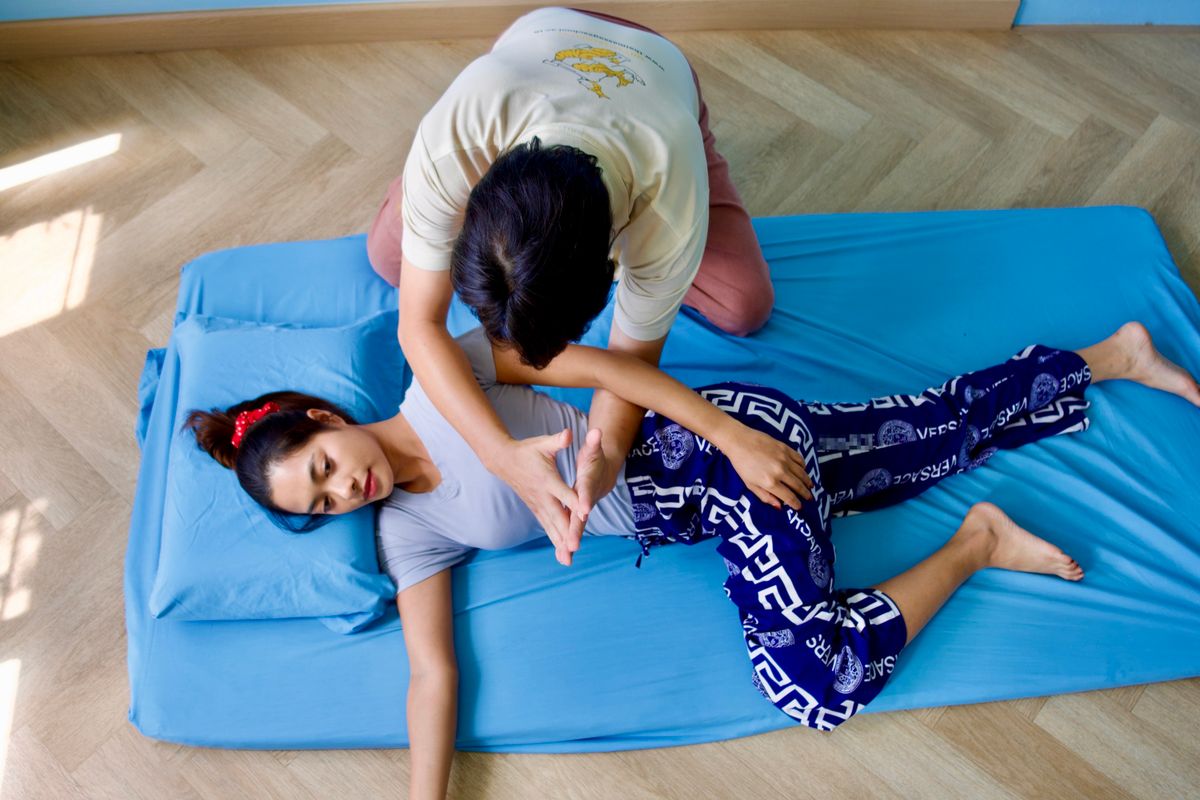
Thai massage confuses people before they've even booked it. It isn't the oil-and-table massage most of Kharghar has already had, and it isn't a yoga class either. It's somewhere between the two: a therapist moves your body through a series of stretches on a floor mat, fully clothed. At our Sector 7 branch, it's one of the therapies people ask the most questions about before they say yes, so here's exactly what happens, start to finish, and how to tell if it's the right choice for you.
What Actually Happens in a Thai Massage
You keep your clothes on. Sea Med Spa gives you loose cotton pyjamas to change into, because the session works through a full range of movement that regular clothes restrict. You lie on a padded mat rather than a table, and there's no oil involved, which is the biggest surprise for anyone used to Balinese or Swedish work. Instead, the therapist uses their hands, forearms, knees and sometimes their own bodyweight to guide you through a sequence of stretches, while working rhythmic compression along your arms, legs and back in between.
The technique traces back more than two thousand years, with roots that overlap Indian Ayurvedic bodywork and traditional Thai medicine (Healthline has a good history of it if you want the full background). Traditional practice describes the body as having a network of energy lines, called sen, and works compression along them, similar in concept to meridians in Chinese medicine. You don't need to know any of that theory to feel the practical result: a mix of firm compression and slow, held stretches, at a pace the therapist sets by reading how your body responds.
What to Expect, Step by Step
You arrive, change into the pyjamas we give you, and the therapist starts you off lying down while they work compression along your feet and legs to warm the muscle before any stretch. From there, the sequence moves through your legs, hips and back, then your arms and shoulders, and usually finishes with some work on your neck and scalp. Some positions will have the therapist kneeling beside you, some will have them using their legs to brace a stretch while your limb rests against them. It looks more dramatic than it feels. Nothing moves further than your own joints already allow, and the therapist is reading your body the whole time, not following a fixed script.
A full 90-minute session covers your whole body this way. The 60-minute version usually skips or shortens the scalp and face work at the end, so if that's your favourite part, ask for the longer session.
How You'll Feel Afterward
Most people feel loose rather than sore, closer to how you feel after a good stretch session at the gym than after a hard workout. It's common to feel a bit more tired than usual for the rest of the day, especially the first time, because your body has just moved through a much bigger range than it's used to. Drink water afterward and give yourself a slow half hour before you rush back into anything physical. If you're mildly stiff the next morning, that usually settles within a day. If anything feels genuinely painful rather than just tired, that's worth mentioning to us so we can adjust the next session.
Thai Massage vs Deep Tissue Massage
Both run at our Sector 7 branch, and both work with real pressure, so people often ask which one they should book. Deep tissue stays in one place: slow, sustained pressure worked into a specific knot or tight area, usually on a table with oil, aimed at muscle that's been tense long enough to need real time on it. Thai massage moves you through positions instead of holding pressure in one spot, and it's aimed at your joints and range of motion as much as your muscles.
A rough way to choose: if you've got one specific area (a stiff neck, a knot between your shoulder blades) that needs focused attention, deep tissue gets there faster. If you're generally tight, feel stuck rather than sore, or you sit at a desk all day and want your hips and back to move more freely again, Thai massage tends to be the better fit. Tell us either way when you message, and we'll point you at the right one.
Is Thai Massage Painful?
It shouldn't be. It's firm, and a deep stretch held for a while can feel intense in the moment the same way a good yoga class can, but it's never meant to hurt. A 2020 study in the Journal of Bodywork and Movement Therapies found Thai massage produced real gains in flexibility compared with static stretching alone, which lines up with what most people actually come back for: they leave moving more easily, not sore. Say something the moment anything feels like too much. A good therapist adjusts the pressure and the depth of a stretch to what your body can handle that day, not a script.
Who Might Want a Different Therapy
Thai massage isn't the right starting point for everyone. If you've had a recent injury, surgery, or you're managing a joint condition, mention it before you book. If you're pregnant, ask us first. And if what you actually want is to lie still, get oiled up and switch off completely, our Balinese or Swedish therapies will suit you better. None of that means Thai massage is off the table permanently. It just means the timing or the therapy might need to be different today.
Booking Thai Massage at Sea Med Spa
Thai massage runs at our Sector 7 branch only, alongside deep tissue, Balinese and Swedish. Sessions run 60 or 90 minutes. Rates vary by therapist, so message us on WhatsApp and we'll confirm the current rate and hold you a mat. Say which length you'd like and whether it's your first time, so the therapist knows to explain each part of the sequence as they go rather than assuming you already know what's coming.
Common questions
Is Thai massage painful?
It shouldn't be. It's firm and a deep stretch can feel intense for a moment, but it's never meant to hurt. Tell your therapist straight away if anything feels like too much, and they'll adjust the pressure or the stretch.
How long does a Thai massage session last?
60 or 90 minutes, same as most of our other therapies. Message us on WhatsApp to check what's available and we'll confirm the current rate.
What should I wear for a Thai massage?
You don't need to bring anything. We give you loose cotton pyjamas to change into, since the session moves your body through a full range of stretches that everyday clothes would restrict.
Which Sea Med Spa branch offers Thai massage?
Our Sector 7 branch only. It's one of that branch's specialties, alongside deep tissue, Balinese and Swedish massage.
How is Thai massage different from deep tissue massage?
Deep tissue holds slow, sustained pressure on a specific tight area, usually on a table with oil. Thai massage moves you through a sequence of stretches on a mat, fully clothed, with no oil, and it's aimed at your joints and range of motion as much as your muscles.
Do I need to already be flexible for Thai massage?
No. The therapist works within whatever range your body has that day and builds from there. Most people who book it are hoping to move more easily, not showing up already flexible.
Ready to book Sector 7?
Shop No 13&14, Ravechi Heights, Plot No 25, Sector 7, Kharghar, Panvel, Maharashtra 410210